Building a barndominium in Fredericksburg
What to know before building a barndominium near Fredericksburg: land, ag valuation, water, short-term rental rules, and drive times to Austin.
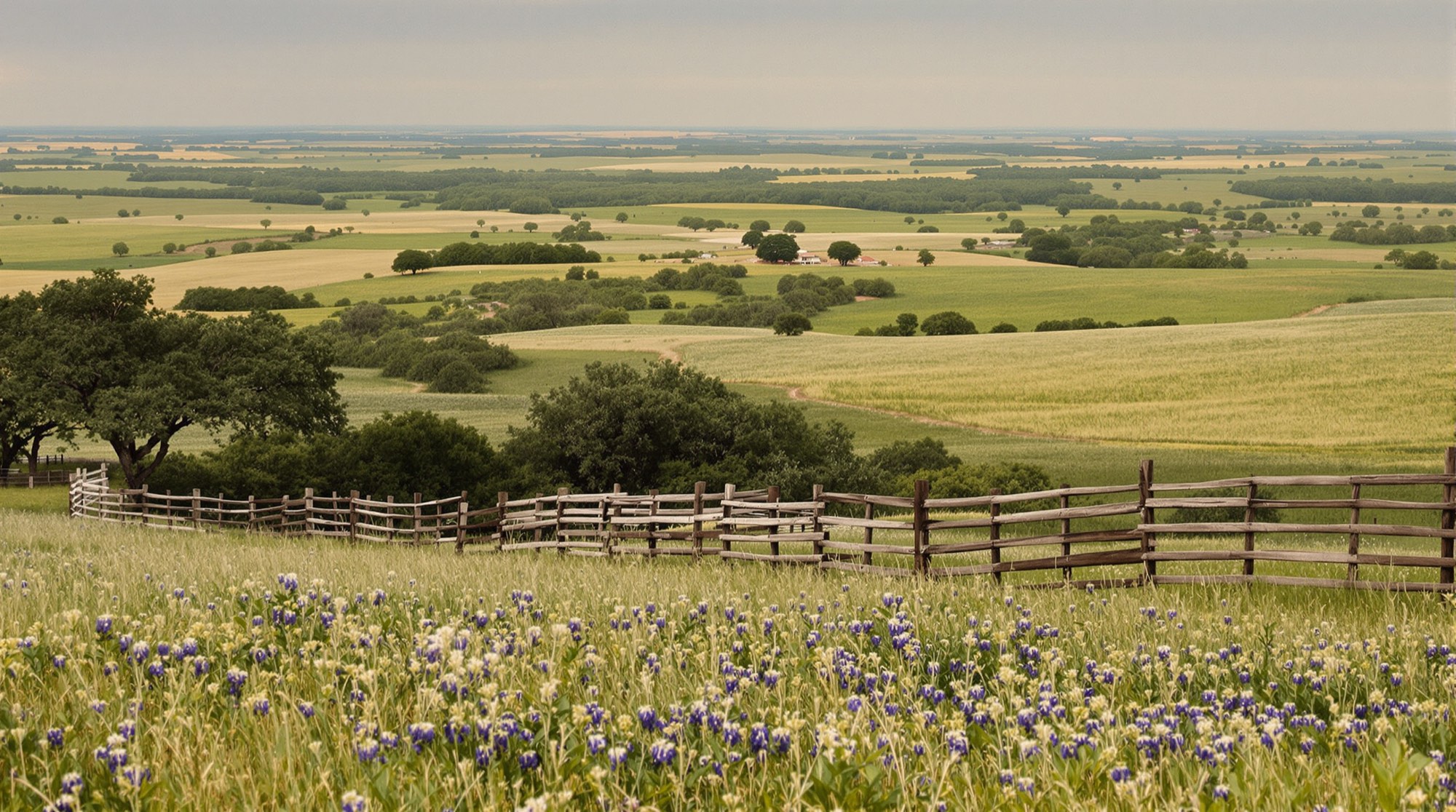
Why buyers choose the Fredericksburg area
Fredericksburg draws people who want acreage, views, and a town with real character within reach of two major cities. Downtown Austin is about 80 miles east on US 290, roughly an hour and a half by car. San Antonio is about 70 miles southeast on US 87. A barndominium suits this kind of property: you can put the home, the shop, and the equipment under one roof, and the steel shell holds up to Hill Country heat and hail.
Before you buy land or sign a contract, work through the five topics below.
1. Ag valuation lowers taxes on land, not the house
Texas ag valuation, formally 1-d-1 open-space appraisal, taxes qualifying land on what it produces instead of its market value. On Hill Country acreage the difference can be large. It has limits that buyers often miss:
- The house is taxed at market value. Gillespie Central Appraisal District appraises improvements, including homes and barns, separately at market value.
- So is the homesite. The land under and around your home does not get ag value.
- The use needs a history. The land must have been in agricultural use for at least five of the past seven years. Buying a tract that already has ag valuation, and keeping the use going, is far easier than starting fresh.
- Intensity matters. Gillespie CAD's published guidelines call for at least two animal units for livestock, with a typical stocking rate of one animal unit per 20 to 25 acres of native range. Hay fields typically run five acres or more. Orchards and vineyards typically start at three acres.
- Wildlife management is an option. Land that already qualifies can convert to wildlife management use with a plan filed on the Texas Parks and Wildlife form.
- Changing the use triggers a rollback. Taking land out of agricultural use triggers a rollback tax: the difference between market-value and ag-value taxes for the prior three years, plus interest.
Lay out the homesite and the working acreage together. That keeps the ag land's qualification intact and stops the build from eating into it. Check the current Gillespie CAD agricultural guidelines before you buy, since the district updates them. Our ag valuation guide covers wildlife management, buying land with ag valuation in place, and the homestead exemption.
2. Water shapes the budget and the site plan
Most rural properties around Fredericksburg rely on private wells. Depth varies widely across the county, and a well commonly costs $15,000 to $35,000 drilled and equipped. The Hill Country Underground Water Conservation District manages groundwater in Gillespie County. In 2022 the district imposed a temporary moratorium on new irrigation, municipal, and commercial well permits after warning of critical depletion in the Ellenberger Aquifer. The moratorium expired in 2023, but it shows why you should ask neighbors about their wells and check district rules before you close on land.
Rainwater collection works well on a barndominium. A large metal roof sheds clean water, and a cistern can back up the well or water livestock.
3. Short-term rental rules differ inside and outside the city
Wine country tourism makes guest houses popular, but the rules depend on location:
- Inside Fredericksburg city limits, any stay under 30 days requires a City short-term rental permit. The City inspects the unit before issuing the permit and again at each annual renewal, and it caps the number of permits in each zone. Once a zone hits its cap, the City issues no new permits there until one opens up.
- In unincorporated Gillespie County, there is no City permit, but you must collect the 6% state hotel occupancy tax and the 7% county hotel occupancy tax.
- Anywhere, deed restrictions or HOA covenants can ban short-term rentals outright.
If rental income is part of your plan, confirm it is allowed on the specific tract before you buy.
4. Check deed restrictions for metal buildings
Many rural subdivisions in the Hill Country have deed restrictions. Some limit metal siding, require a minimum square footage, or restrict outbuildings and livestock. Read them early, because they can rule out a barndominium entirely or shape its exterior. A stone wainscot, wood accents, or board-and-batten siding often satisfy a restriction that bans an all-metal exterior.
5. The land is harder to build on than it looks
Hill Country soils are thin over limestone and caliche. That affects three things:
- Septic: Shallow rock often rules out a conventional drain field and calls for an aerobic system.
- Foundation: A soil report and an engineered slab design are worth the cost on every build.
- Drainage: Creeks and low-water crossings flood fast after heavy rain. Check floodplain maps for the building site and the driveway route.
On a positive note, metal roofing handles spring hail far better than asphalt shingles, and a steel frame is not exposed to termite damage.
Weighing a property near Fredericksburg? Request a consultation and we'll talk through the land before you commit.
Start with your land
Tell us about your property. We'll talk through well, septic, access, and layout, then map out what your build will take.
Building across Fredericksburg, Kerrville, Johnson City, Marble Falls, Llano, Boerne, Comfort, Stonewall, Doss, Harper.